What It Looks LikeFuel sender - Variable Potentiometer
By Mark Twombly

How do you know with confidence how much fuel is in the tanks when you taxi for takeoff? The same way you do in your car: Check the fuel quantity indicators. As every new pilot eventually comes to realize, however, fuel quantity indicators in the typical light aircraft are notoriously inaccurate except, perhaps, when they read Empty. Fuel quantity needles bounce in turbulence, often lag in indicating a depleting supply of fuel, and then seem to speed up their descent as they near the big E. This is why we visually check the fuel quantity as part of our preflight inspection.
A big reason for the temperamental behavior of analog fuel quantity gauges is the fuel sender, the mechanism buried within the fuel tank that measures fuel level.
Although there are several different types of analog and digital fuel senders, the type found in most light single-engine aircraft is based on a simple float system. The lightweight float is attached to one end of a thin metal arm, the other end of which pivots inside a sealed housing.
The housing, which is submerged in the fuel, contains a resistance element and contact system. The float arm contacts a coil or winding inside the housing that is energized with current sent from the fuel quantity indicator on the instrument panel. Different positions on the winding represent different resistance levels. As fuel is consumed and the float descends in the tank, the float arm contact slowly moves along the winding, gradually changing the resistance in the current read by the gauge. The current reading is translated into an analog needle indication.
So what happens if the electrical current somehow shorts and "leaks" into the fuel tank? No worries -- the current is too weak to ignite the fuel or even fuel vapors.
One manufacturer of resistance type float fuel senders says the design life is 100,000 empty-full-empty cycles but includes this important caveat: "Actual service life may be less because of wear caused by vibration and fuel movement." Add to that the ravages of time and infrequent use that no doubt accelerate the aging process of a fuel sender
.
So, along with learning to take off with sufficient fuel in the tanks to complete the intended mission plus some, we soon learn to treat fuel gauges with a healthy skepticism. The best bet is to back up the fuel quantity indicators with another simple measuring device: a watch.
|

Showing posts with label AOPA fuel management accuracy. Show all posts
Showing posts with label AOPA fuel management accuracy. Show all posts
Tuesday, May 6, 2014
What it Looks Like - Aircraft Fuel Sender - Mark Twombly AOPA

Thursday, October 11, 2012
Press Release - TSO Granted - AOPA Summit
NEWS RELEASE FOR
IMMEDIATE RELEASE
CIES Corporation receives FAA TSO
approval for new digital fuel level senders
October 10, 2012, CIES Corporation of Redmond, Oregon has received
FAA TSO C55a approval for its line of digital fuel level senders. The float
based fuel level senders are designed to replace the majority of the existing
fuel level sending systems in general aviation aircraft. The proprietary and
patented system provides a new level of accuracy, reliability, and stability to
fuel level indication in the cockpit. CIES meets a TSO standard of 2% variance
in tank volume, a standard normally reserved for corporate and commercial
aircraft with corrected capacitive solutions. No other float based system meets
this stringent TSO standard while achieving the intrinsically safe (i.e. “no
wires in the tank”) requirement.
Richard Kirkness, Vice President of
CIES said, "As a manufacturer of aircraft systems, we see FAA certification
as critical to our success and the foundation for everything we do. FAA
approval is the result of months of hard work on the part of our team here in Redmond
and could not have come at a better time for CIES as the company continues to
grow and strives to achieve the goal of becoming a world class supplier of advanced
systems and technologies.”
Charlie Babb, General Manager of
CIES added, “After the successful introduction at the beginning of this year of
our senders on all new Cirrus production aircraft, we began working with other manufacturers
and owners groups to provide specific fuel level sending solutions for
production and legacy aircraft. The next logical step was to acquire FAA certification
to validate our quality control system and lean manufacturing processes while
making aircraft integration and approval significantly easier to obtain.”

The CIES fuel level senders
require a dedicated digital fuel level display to ensure that the 2% accuracy achieved
in the fuel tank is provided in the cockpit as well. As a
result, CIES partnered with Aerospace Logic in Hamilton, Ontario to utilize
their digital fuel level cockpit display. Aerospace Logic updated their fuel
level gauging system to accept the digital communication link from the CIES
digital senders.
CIES Corporation of Redmond,
Oregon USA provides a range of high-technology products and support services to
aviation, aerospace, and the broader transportation marketplaces.
For additional information on CIES and its products please
visit the CIES Inc Website
For additional information on Aerospace Logic and its products please visit the Aerospace Logic Website
For additional information on Aerospace Logic and its products please visit the Aerospace Logic Website
Thursday, April 19, 2012
Fuel Management
Fuel Management
“From an accident prevention perspective, fuel mismanagement is one of the most frustrating problems. The accidents are easy to avoid. The hardpart is reaching the pilots who are most at risk, because they’re not the ones attending safety seminars or taking online courses. A new approach is needed to get pilots to stop and think about the issue. Airing some ‘dirty laundry’? Perhaps, but we think it’s more than justified by the lives, aircraft, and dollars we lose to this problem every year.ACCIDENTS do far more damage to GA’s reputation than educational efforts to rectify the situation.
It shows that, the pilot community, is making a good faith effort to address the problem.”
—Bruce Landsberg, President, AOPA Foundation
Fuel Management Accidents
Fuel management accidents are among the most preventable types of GA mishaps, and yet pilots still manage to turn perfectly good airplanes into impromptu gliders at an alarming rate well over two per week in the US.
The primary way GA pilots manage fuel on board is to do arithmetic.
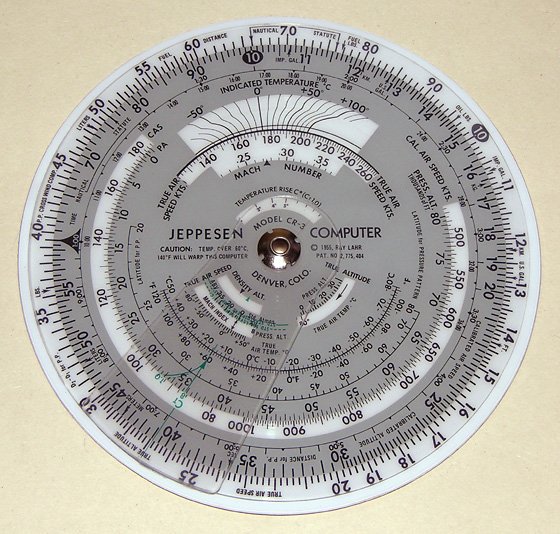
You look at the length of your trip, the winds, read some performance charts, then bust out your calculator or whiz wheel to figure out how long it will take you to get to your destination at what fuel burn. I might get anywhere from 10 to 18 miles per gallon on a flight. And if the headwind is stronger than I expected or I'm routed the long way, it might take more than that. The 30 minute required reserve is really not enough.
FAR Part 91-151
Subscribe to:
Posts (Atom)